
Argentine Ant
Linepithema humile
The most common and persistent ant species in Southern California. They form massive supercolonies with millions of workers and multiple queens, making them extremely difficult to eliminate without professional treatment.
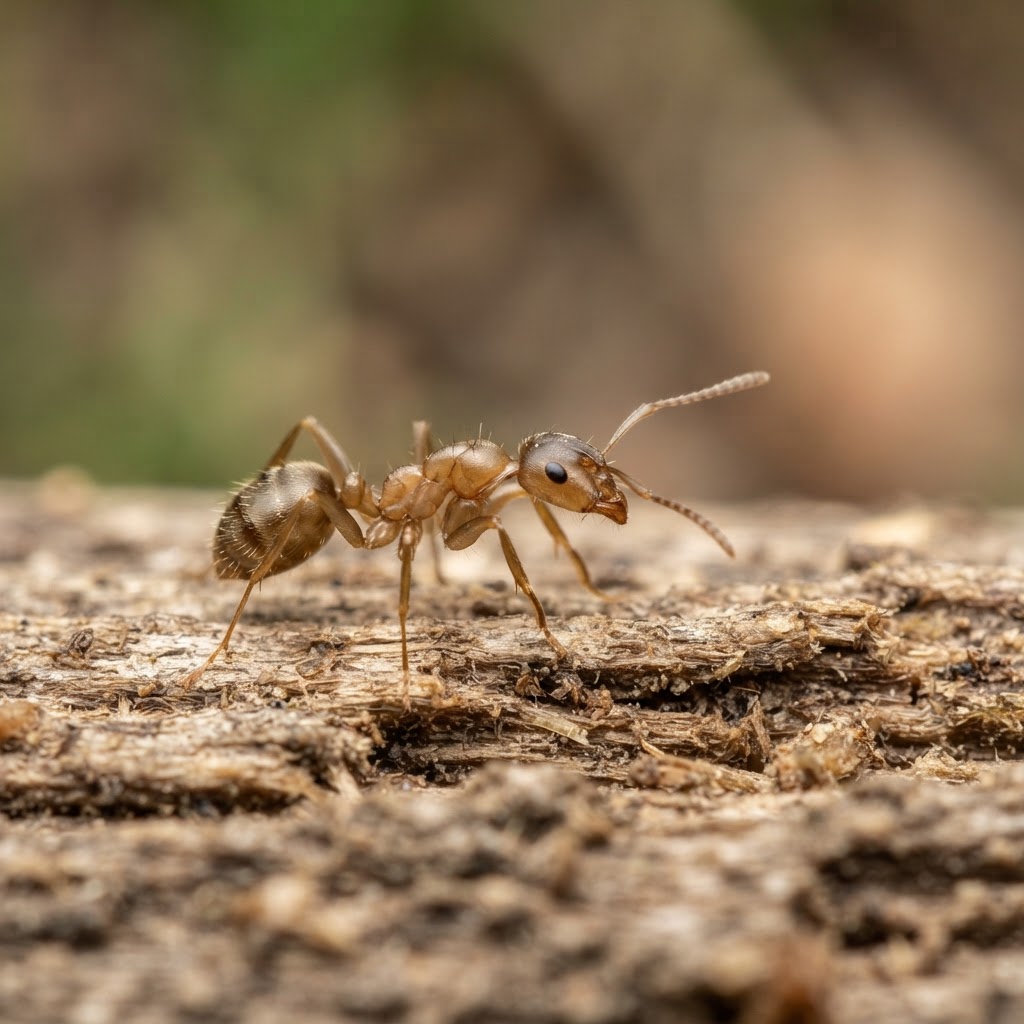
Appearance
Small, about 1/8 inch long, with a uniform light to dark brown color. They have a single node between the thorax and abdomen and emit a musty odor when crushed.
Behavior
Highly social and cooperative between colonies. They form trails along edges and lines, often traveling long distances between nest and food sources. They aggressively displace native ant species and tend aphids for honeydew.
Habitat
Nests in soil, under rocks, boards, mulch, and along sidewalks. They frequently enter homes through cracks and openings, especially during extreme weather or when seeking food and water.
Signs of Infestation
Visible ant trails along walls, baseboards, or outdoor paths. Large numbers of ants appearing suddenly in kitchens or bathrooms. Small piles of soil or debris near nesting sites.
Health Risks
Low medical risk, but they can contaminate food. They tend aphids and scale insects, which can damage plants and trees in your yard.
Prevention Tips
Eliminate standing water. Trim vegetation away from your home's foundation. Seal cracks and crevices. Store food in sealed containers. Keep surfaces clean and free of crumbs. Remove aphid-prone plants near the home.
Common Questions About Argentine Ant
Local infestation questions homeowners ask about Argentine Ant across our LA County and Kern County service areas.
Argentine ants form massive supercolonies that span entire San Fernando Valley neighborhoods. When you treat only your own home, ants simply trail in from neighboring colonies, so the trails return within days. Coordinated, recurring professional perimeter service is the most effective way to keep Argentine ant trails out of Valley homes.
Argentine ant trails return in Santa Clarita because the colonies span entire neighborhoods with multiple queens. Killing the visible trail doesn't reach the colony, so workers simply find a new route indoors. Recurring perimeter treatment disrupts the colony's foraging network and, combined with sealing entry points like weep holes and utility penetrations, keeps trails from re-establishing.
Still have questions? Get in touch with us.
Need Ant Control?
Our experienced technicians are ready to help protect your home.