Carpenter Ant
Camponotus spp.
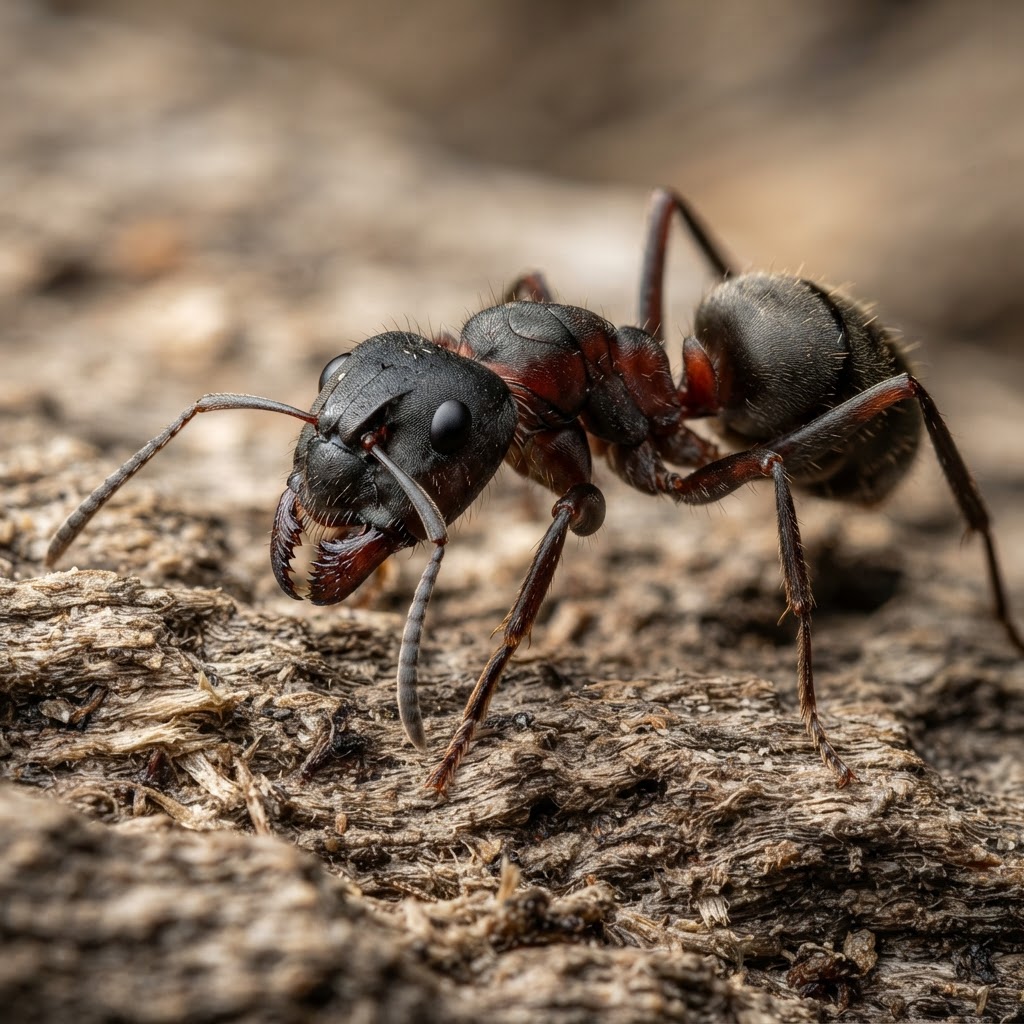
Large ants that excavate wood to build their nests, causing structural damage similar to termites. Unlike termites, they don't eat wood — they hollow it out for nesting. They are one of the largest ant species in North America.
Appearance
Large ants, 1/4 to 1/2 inch long, with workers varying in size. They are typically black, dark brown, or a combination of black and red. They have a rounded thorax and a single node between the thorax and abdomen. Their antennae are elbowed.
Behavior
Nocturnal foragers that travel long distances from the nest. They primarily nest in wood, especially wood that is moist or decaying. They don't eat wood but excavate galleries for nesting. Colonies can have thousands of workers and take years to mature.
Habitat
Moist or decaying wood in trees, fence posts, and structural wood in homes. They prefer areas with water damage: around windows, doors, roof eaves, and in crawl spaces. They can also nest in foam insulation.
Signs of Infestation
Sawdust-like material (frass) near baseboards, windows, or doors. Rustling sounds inside walls. Winged ants (swarmers) emerging indoors in spring or summer. Foraging trails along edges and wires, especially at night. Smooth, clean galleries in damaged wood.
Health Risks
They do not pose a direct health risk to humans, but they can cause significant structural damage if left untreated. They bite if handled, which can be painful but is not dangerous.
Prevention Tips
Eliminate moisture problems — fix leaks and improve ventilation. Replace water-damaged wood. Trim tree branches away from the home. Store firewood away from the building and elevated off the ground. Seal cracks and gaps around windows and doors. Keep vegetation trimmed away from the foundation.
Common Questions About Carpenter Ant
Local infestation questions homeowners ask about Carpenter Ant across our LA County and Kern County service areas.
Yes — Tehachapi's cooler, wooded environment and mature trees create ideal conditions for carpenter ants. They don't eat wood but excavate moisture-damaged wood to build nests, which can damage decks, eaves, and any damp wood around the home. Fixing moisture issues and catching nesting activity early with a spring inspection prevents structural damage.
Still have questions? Get in touch with us.
Need Ant Control?
Our experienced technicians are ready to help protect your home.