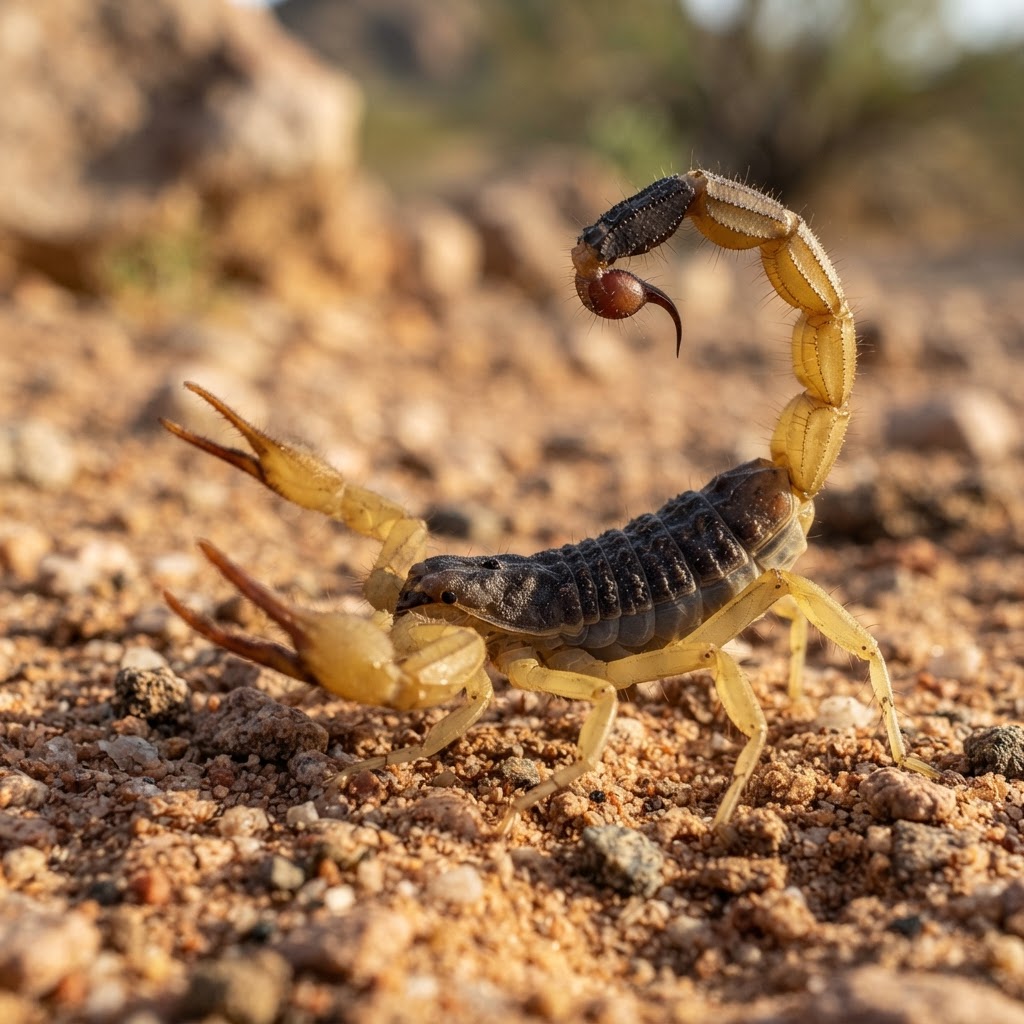
Desert Hairy Scorpion
Hadrurus arizonensis
The largest scorpion species in North America, commonly found in the high-desert regions of the Antelope Valley. While their sting is painful, it is not considered medically dangerous to healthy adults.
Appearance
Large scorpion, 4 to 5 inches long, with a yellow to tan body and a dark brown to black back. They are covered in fine brown hairs that help them detect vibrations in the soil.
Behavior
Nocturnal predators that burrow into sandy or rocky soil. They feed on insects, spiders, and other scorpions. They are relatively docile but will sting if handled or stepped on. They glow under UV light (blacklight).
Habitat
Desert and semi-arid areas with sandy or rocky soil. They burrow under rocks, logs, and into the ground. They may enter homes during extreme heat or after heavy rains.
Signs of Infestation
Finding scorpions inside the home, especially in bathrooms, closets, or near exterior doors. Burrow openings in sandy soil near the foundation. UV light can reveal them at night.
Health Risks
Their sting is similar to a bee sting — sharp pain, swelling, and localized numbness. Not life-threatening to healthy adults, but seek medical attention if allergic or if symptoms persist. More concerning for children and pets.
Prevention Tips
Seal cracks and gaps around doors, windows, and foundations. Remove debris, rocks, and woodpiles near the home. Keep vegetation trimmed. Use weather stripping on doors. Check shoes and clothing before wearing.
Common Questions About Desert Hairy Scorpion
Local infestation questions homeowners ask about Desert Hairy Scorpion across our LA County and Kern County service areas.
The large scorpions most commonly found around Mojave homes are desert hairy scorpions. They look intimidating, but their sting is similar to a bee sting and is not medically significant for most people. However, Mojave is also home to bark scorpions, which are more dangerous. If you're unsure which species you're seeing, we can identify it during an inspection and treat accordingly.
Still have questions? Get in touch with us.
Need Scorpion Control?
Our experienced technicians are ready to help protect your home.