
German Cockroach
Blattella germanica
The most common and troublesome cockroach species in homes and businesses. They reproduce rapidly — a single female can produce hundreds of offspring in her lifetime, making professional intervention essential.
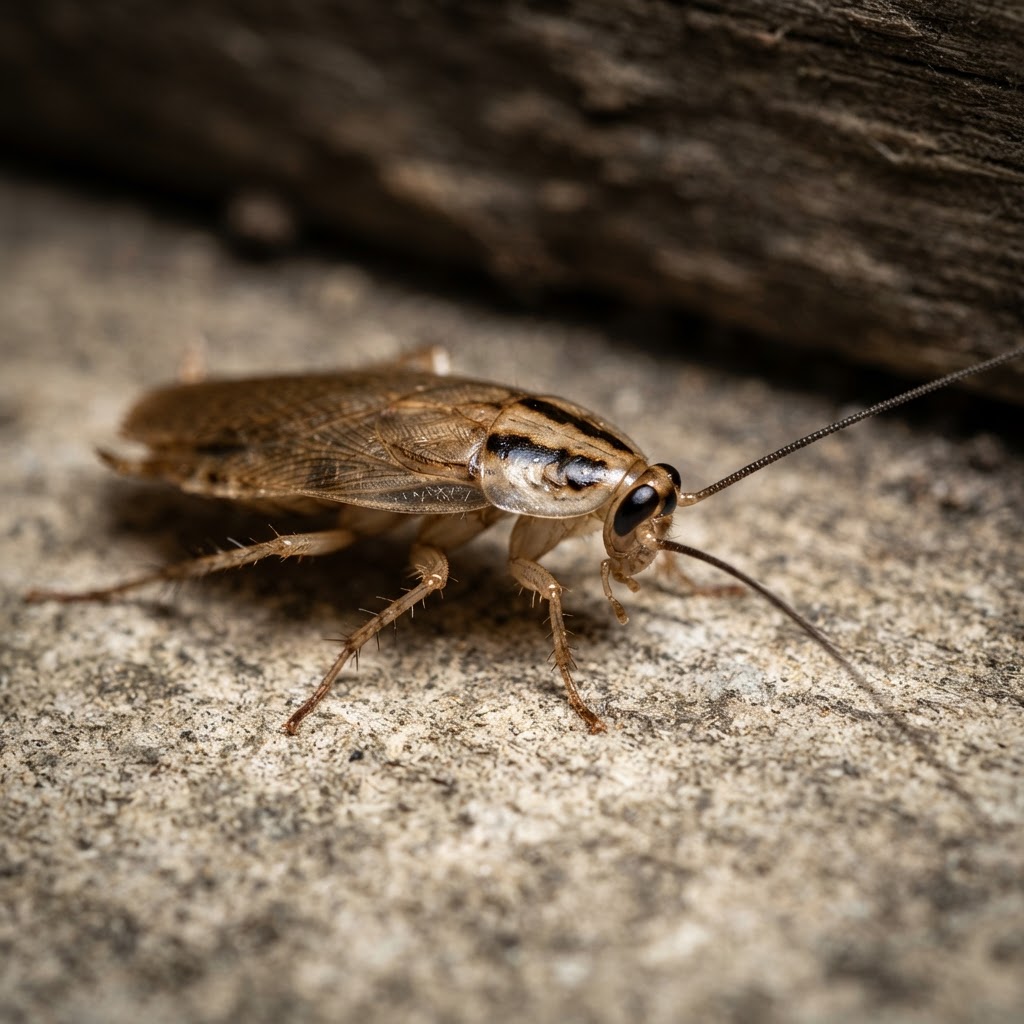
Appearance
Light brown to tan, about 1/2 to 5/8 inch long, with two distinctive dark parallel stripes running lengthwise on the pronotum (shield behind the head). They have long antennae and wings but rarely fly.
Behavior
Nocturnal and secretive. They prefer warm, humid environments near food and water. They are omnivorous and will eat almost anything, including glue, soap, and toothpaste.
Habitat
Kitchens and bathrooms are the most common areas. They hide in cracks, behind appliances, under sinks, in cabinet hinges, and inside electronic devices. They prefer temperatures between 70-80°F.
Signs of Infestation
Droppings that look like dark pepper or coffee grounds in cabinets and drawers. Egg cases (oothecae) that are light brown and pill-shaped. A musty, oily odor in heavy infestations. Live roaches seen during the day indicates a severe infestation.
Health Risks
They can trigger asthma and allergic reactions, especially in children. They spread bacteria including E. coli and Salmonella by contaminating food and surfaces.
Prevention Tips
Keep kitchens spotless — crumbs and grease attract them. Fix leaky pipes. Store food in sealed containers. Take out trash regularly. Seal cracks and gaps. Reduce clutter, especially cardboard, which they use for shelter.
Common Questions About German Cockroach
Local infestation questions homeowners ask about German Cockroach across our LA County and Kern County service areas.
In Northridge's multi-family housing and attached townhomes, German cockroaches spread between units through shared walls, plumbing, and utility chases. Treating one unit alone rarely works — they simply move next door. Coordinated professional treatment across affected units, plus sanitation and sealing gaps around pipes, is needed to fully eliminate them.
Still have questions? Get in touch with us.
Need Cockroach Control?
Our experienced technicians are ready to help protect your home.