Paper Wasp
Polistes dominula
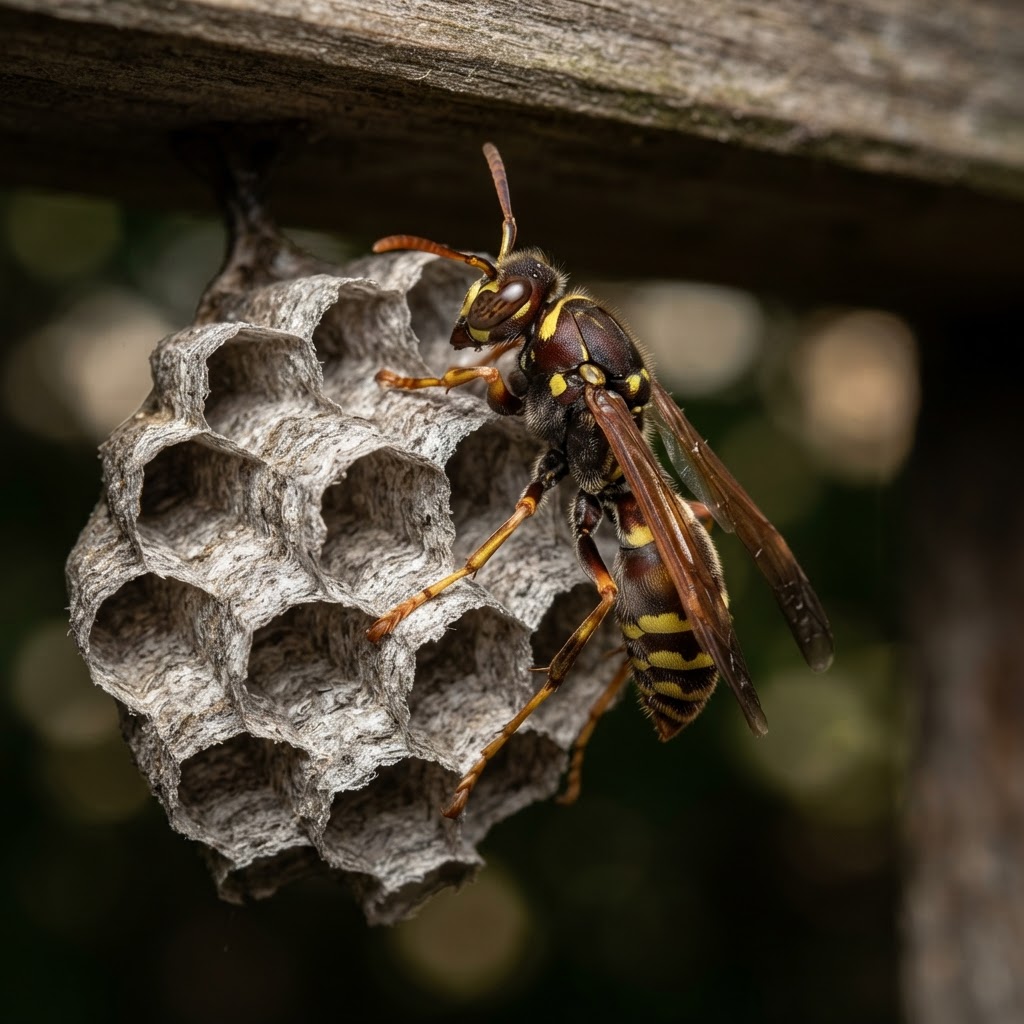
Common stinging insects that build distinctive umbrella-shaped paper nests. While less aggressive than yellowjackets, they will fiercely defend their nest if threatened, and multiple stings can be dangerous.
Appearance
Slender body, 3/4 to 1 inch long, with a narrow waist. Brown to reddish-brown body with yellow markings. They have long legs that dangle below them during flight. They have a smooth, mostly hairless body.
Behavior
Social insects that live in small colonies. They build open-comb paper nests from chewed wood fibers. They are predatory, feeding on caterpillars and other insects, making them beneficial pollinators and pest controllers.
Habitat
Under eaves, in shrubs, on tree branches, inside attics, and on fences or playground equipment. They prefer protected areas with some exposure to open air.
Signs of Infestation
Visible umbrella-shaped paper nests hanging from eaves, branches, or structures. Wasps flying in and out of a specific area. Increased wasp activity near the home in late summer and fall.
Health Risks
Stings cause sharp pain, swelling, and redness. They can sting multiple times. Allergic individuals may experience anaphylaxis, a life-threatening reaction. Multiple stings require medical attention.
Prevention Tips
Inspect eaves, overhangs, and structures for nests in early spring. Remove nests when small and before they become heavily populated. Keep garbage cans sealed. Avoid strong fragrances when outdoors. Seal openings to attics.
Common Questions About Paper Wasp
Local infestation questions homeowners ask about Paper Wasp across our LA County and Kern County service areas.
Paper wasps become defensive when their nest is disturbed, posing a stinging risk to children and pets. In Canyon Country, nests commonly appear under eaves, in attic vents, and in landscape shrubs from spring through fall. If a nest is near a high-traffic area, it's best to have it professionally removed rather than treated DIY, especially late in the season when colonies are largest.
Still have questions? Get in touch with us.
Need Wasp Control?
Our experienced technicians are ready to help protect your home.