Yellow Jacket
Vespula pensylvanica
Aggressive, social wasps that are common throughout Southern California. They are responsible for most stinging incidents in the region and can sting multiple times. The western yellow jacket is the most common species in the area.
Appearance
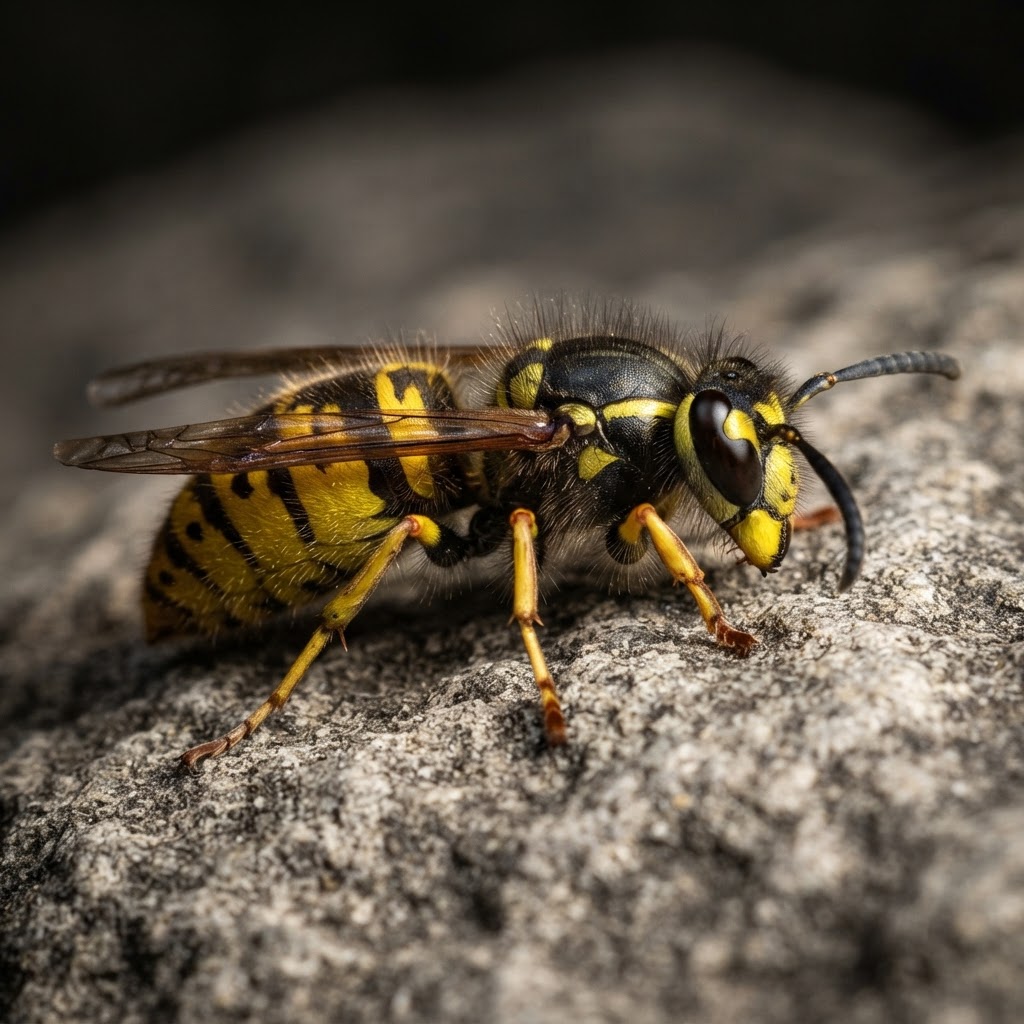
About 3/8 to 5/8 inch long with a stocky body. They have bright yellow and black alternating bands on the abdomen, a yellow face, and relatively short legs compared to paper wasps. Workers have smooth bodies with minimal hair.
Behavior
Highly aggressive, especially in late summer and fall when colonies peak. They are scavengers attracted to protein and sweets, making them common at picnics and outdoor events. They can sting multiple times and release alarm pheromones that attract more wasps.
Habitat
Nests are typically underground in abandoned rodent burrows, but can also be in wall voids, attics, and under eaves. Nests are paper-based and can contain thousands of wasps by late summer.
Signs of Infestation
Sustained yellow jacket activity in a specific area, especially entering and exiting a hole in the ground or a wall. Seeing a steady stream of wasps flying in a straight line to and from a point. Aggressive behavior when approaching a certain area of the yard.
Health Risks
Stings cause sharp pain, swelling, and redness. They can sting multiple times. Multiple stings can be life-threatening even for non-allergic individuals. Allergic reactions (anaphylaxis) can occur and require immediate emergency medical attention.
Prevention Tips
Keep garbage cans tightly sealed. Clean up food and drink spills immediately when outdoors. Avoid wearing strong fragrances. Seal gaps in walls and siding. Do not swat at them — this triggers aggressive responses. Have underground nests professionally removed.
Common Questions About Yellow Jacket
Local infestation questions homeowners ask about Yellow Jacket across our LA County and Kern County service areas.
By late summer, yellowjacket colonies reach peak size and their food preferences shift toward proteins and sugars, making them aggressive at outdoor gatherings. Near Castaic Lake and residential water features, ground-nesting yellowjackets are common. Reducing standing water and food sources helps, but ground nests should always be treated professionally — disturbing them triggers mass stinging.
Still have questions? Get in touch with us.
Need Wasp Control?
Our experienced technicians are ready to help protect your home.